MONO ORBIT /PHOTOGRAPHY/
Rear Seat Diaries
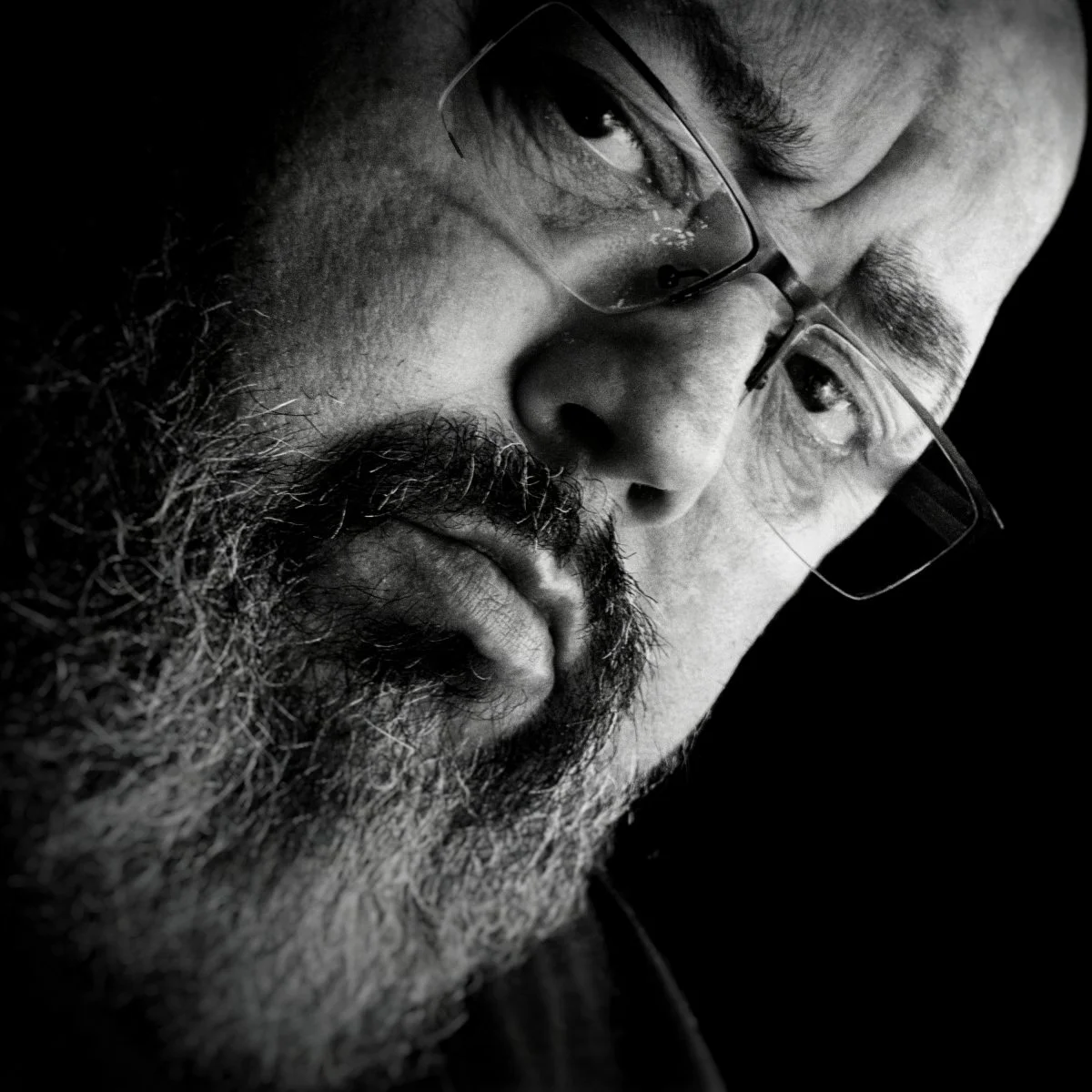
RALPH MILEWSKI
Ralph Milewski (born 1968) is a German photographer who lives and works in the Rhön region of Germany. His photographic work encompasses documentary, experimental, and conceptual approaches.
He developed his photographic practice as a self-taught artist, complemented by workshops in experimental photography and exchanges with other artists. His work emerges both from observing everyday situations and from deliberately staged photographic ideas.
His photographs have been exhibited in several European countries, including Germany, Italy, Poland, Ukraine, and Slovakia. In 2026, his work Rear Seat Diaries – Observation and Intervention was presented in solo exhibitions in Kyiv and Lviv.
His work has been published in All About Photo and PRIVATE – International Review of Photographs, among others, and has received multiple awards.
Milewski is also a member of the Berufsverband Bildender Künstler Unterfranken (BBK) and an associate member of the National Union of Photographic Artists of Ukraine.
Project: Rear Seat Diaries - Observation and Intervention
Project Date Since: 2022
Location: Various locations
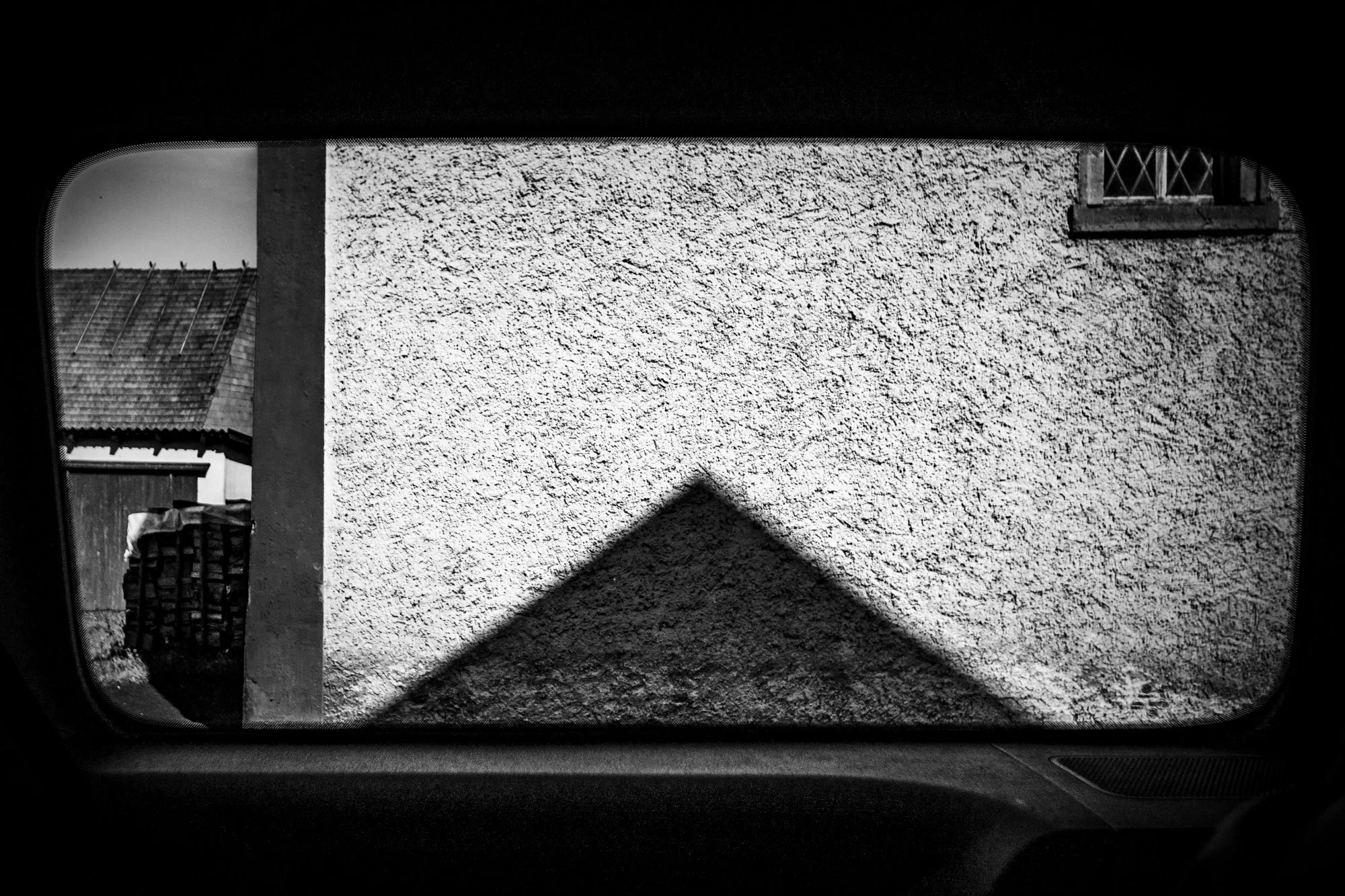
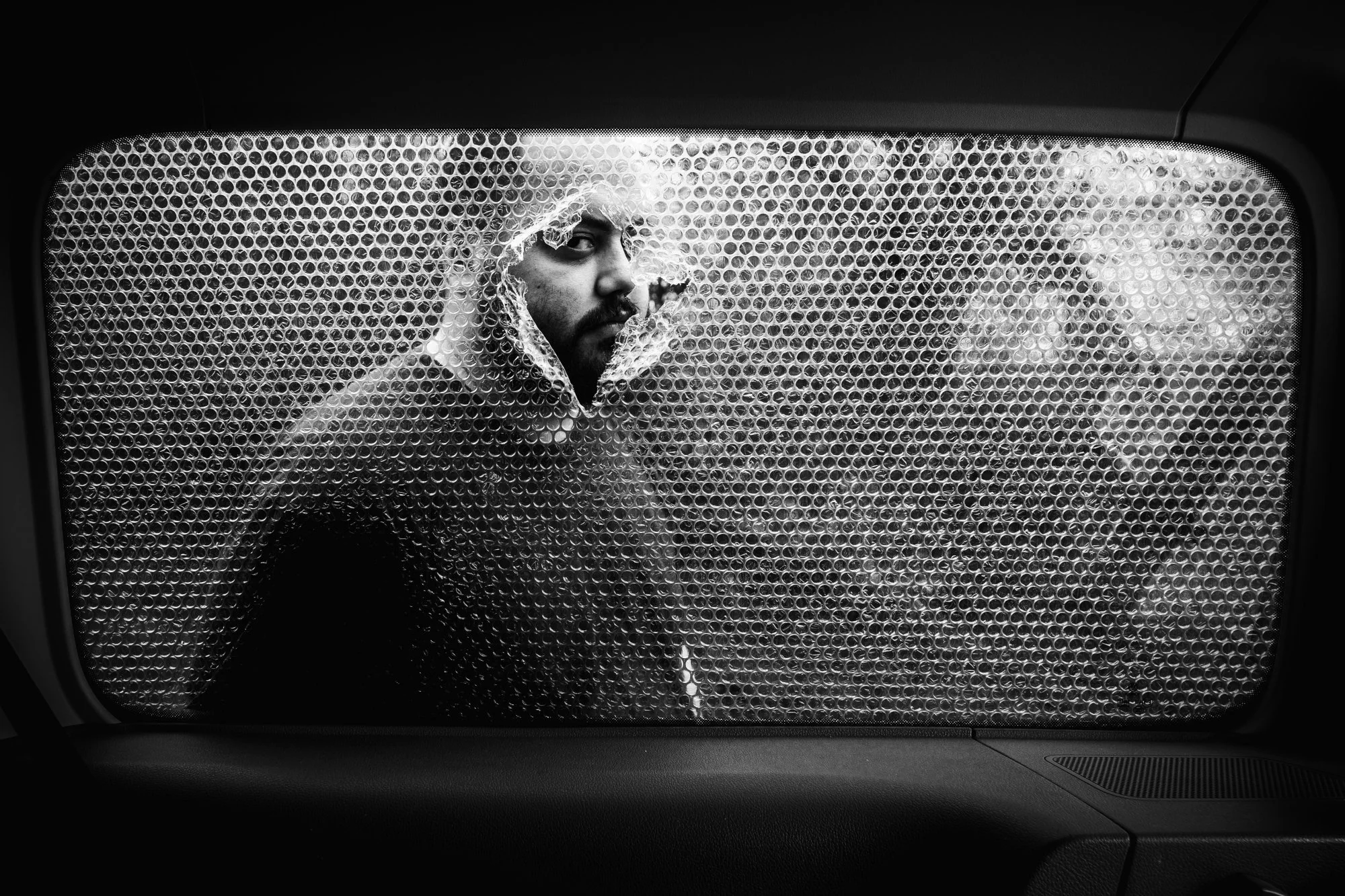
Rear Seat Diaries can therefore only partly be described as a photographic series or a single art project. Rather, it is a photographic practice in its own right, giving rise to an open, continually growing body of work. Neither subject matter, photographic method, visual language, nor outcome is predetermined. Individual photographs can stand on their own or form separate series and projects. What connects them does not necessarily lie in what they depict, but in the recurring pictorial space in which they are created.
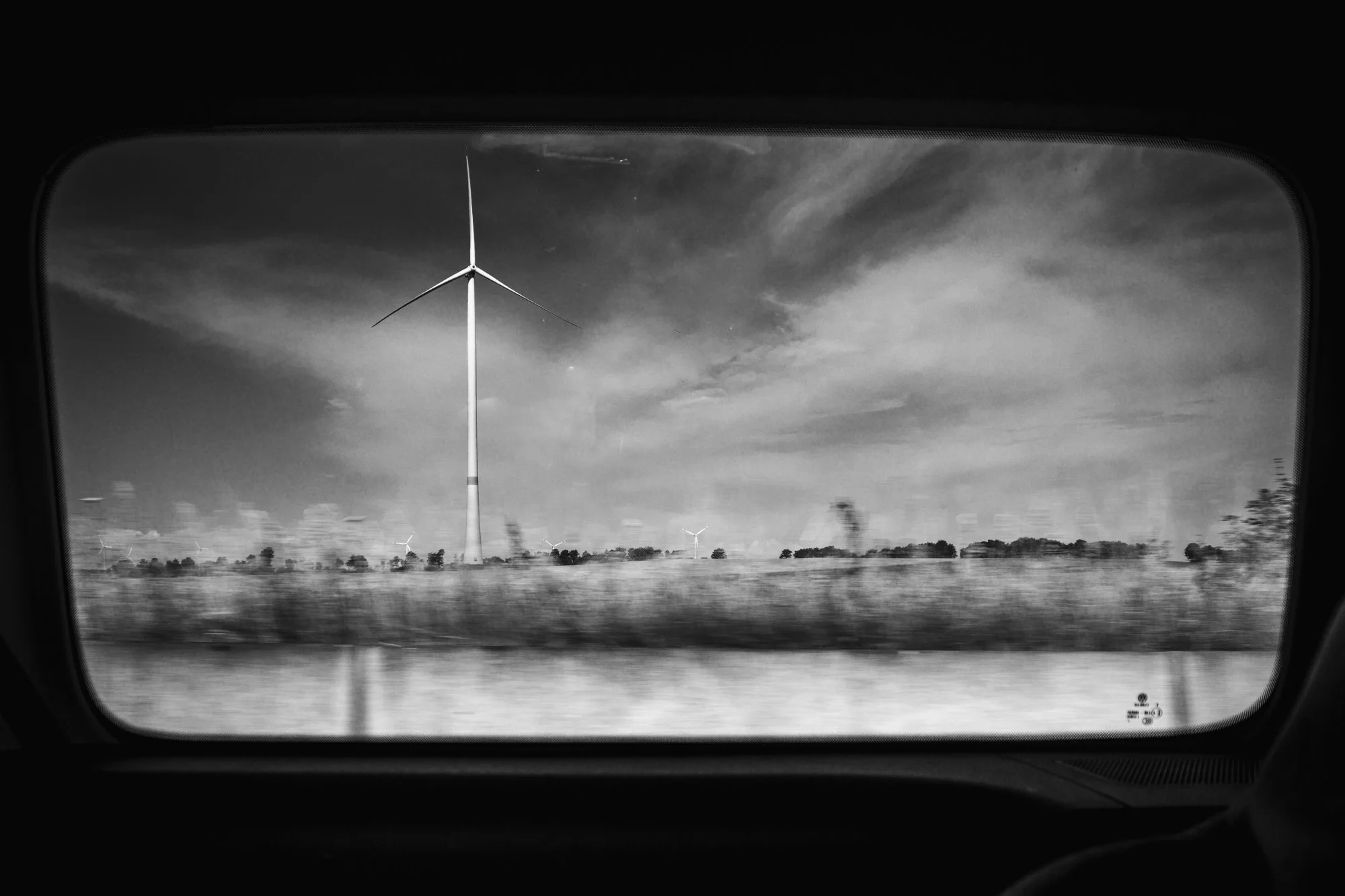
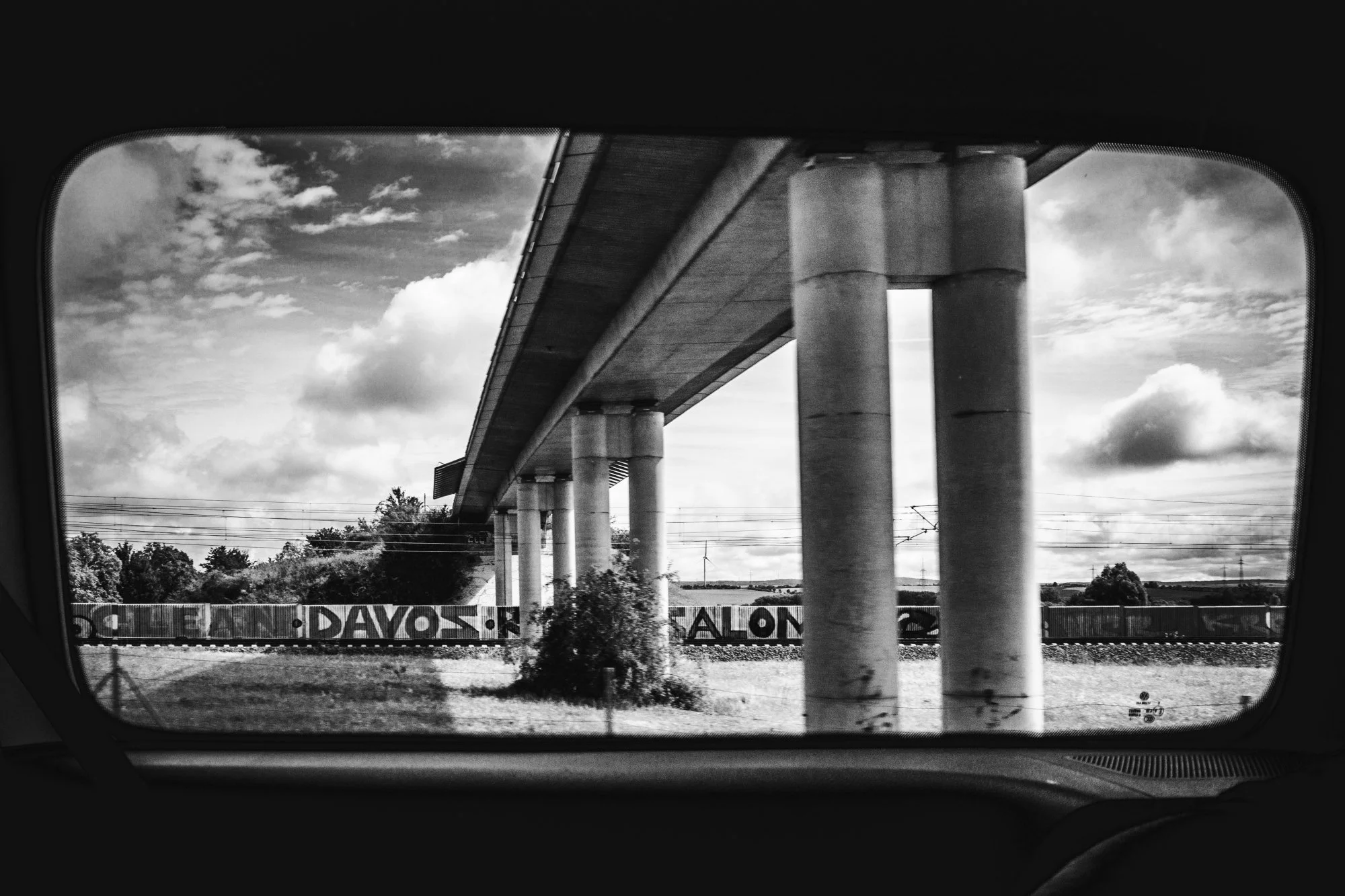
Initially, Rear Seat Diaries was primarily documentary in character. Many of the photographs were taken while the vehicle was moving. Often, there were only fractions of a second to respond to a situation and release the shutter. Sometimes I could anticipate what was about to happen; at other times, my response was almost reflexive. Usually, the situation could not be repeated, and whether a photograph had been successful only became apparent when I reviewed it later.
Over time, an extensive archive developed, in which recurring connections and eventually distinct subseries became apparent. The images came first. The organization followed later.
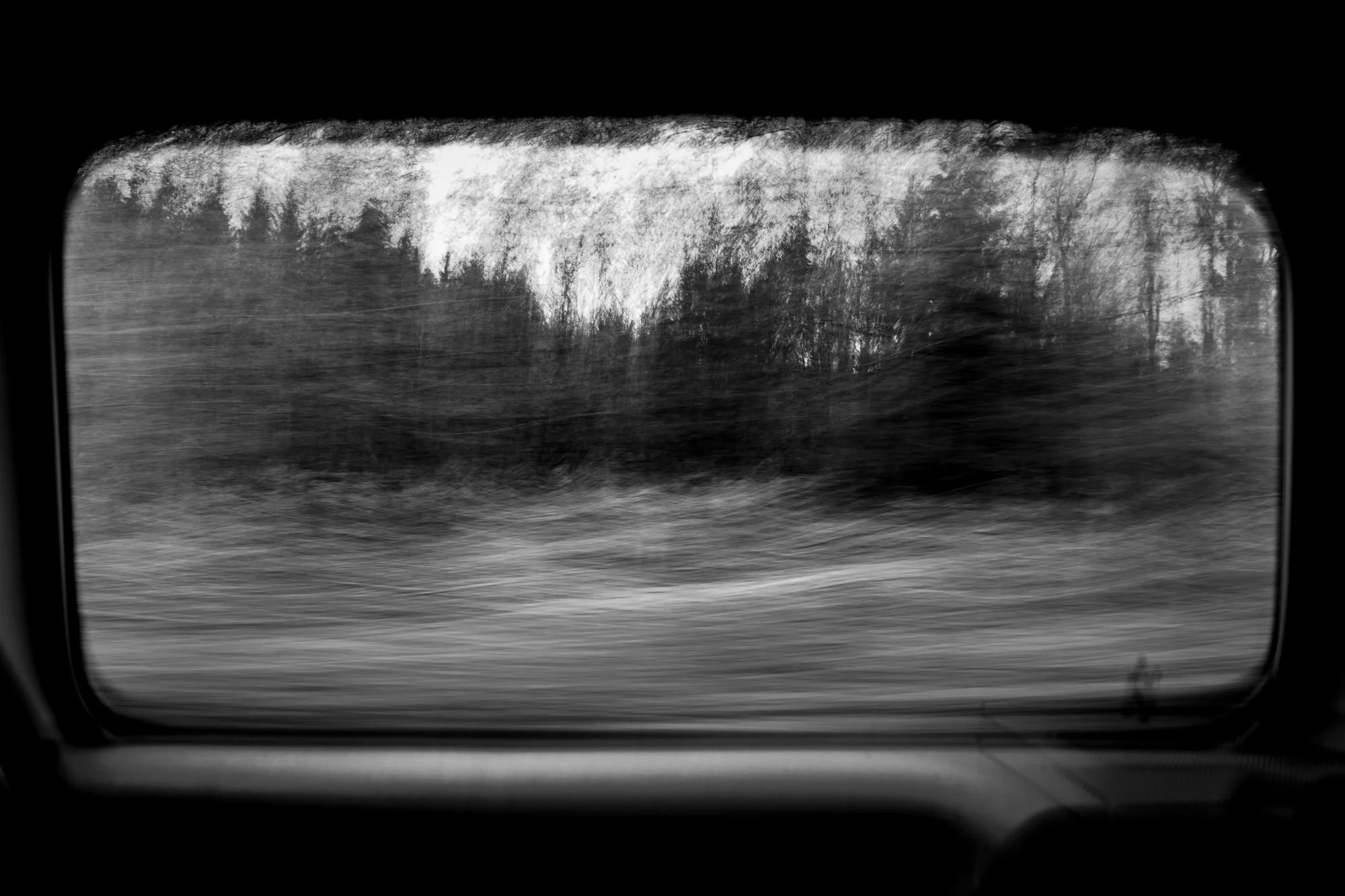
Later, experimental approaches were added. Movement and longer exposure times were used deliberately. What was visible beyond the window began to blur, distort, or partly dissolve into lines and structures. The window frame, however, remained a constant element.
At some point, I also began to create situations specifically for photographs. This expanded the original observation to include deliberate intervention. Whereas in the documentary works the events exist independently of me, in an intervention they come into being, at least in part, for the image.
Both approaches are now part of Rear Seat Diaries. They differ in how much influence I exert on the situation in front of the camera. Their common foundation remains the same characteristic pictorial space.
Rear Seat Diaries is an ongoing photographic practice. The vehicle may be moving or stationary; the photographs may be documentary, experimental, or staged. The possibilities are not definitively fixed.
The frame is the constant. What happens within it remains open.
Rear Seat Diaries began in 2022 during a trip to Spain. While passing Lyon, I took a few casual photographs through the side window of a VW Caddy. At the time, there was no intention to start a project. The photographs were simply meant as a personal message to an acquaintance.
Only when I reviewed the images later did I notice that the window frame, sometimes visible in its entirety, could be more than an incidental boundary. It defined a recurring pictorial space. What had initially happened by chance gradually developed into a deliberate photographic practice.
Since then, the photographs have been taken through the same side window of the same VW Caddy, from the same characteristic spatial position. The constant lies in the recurring relationship between camera, window, and outside space. What happens beyond the window can change.